unlocking flexible payments
Sole Product Designer | Research, UX & UI | 2025Bridging the cash flow gap between sellers and their customers with flexible Installment Plans.
TL;DR
the problem.
Dealers were wasting hours "chasing" builders for huge $50k+ invoices that builders couldn't afford to pay in one go & would delay the payments.
the solution.
Paired with PM, we designed a flexible Payment Plan tool that lets dealers split big bills into smaller, manual installments with automated reminders.
the outcome.
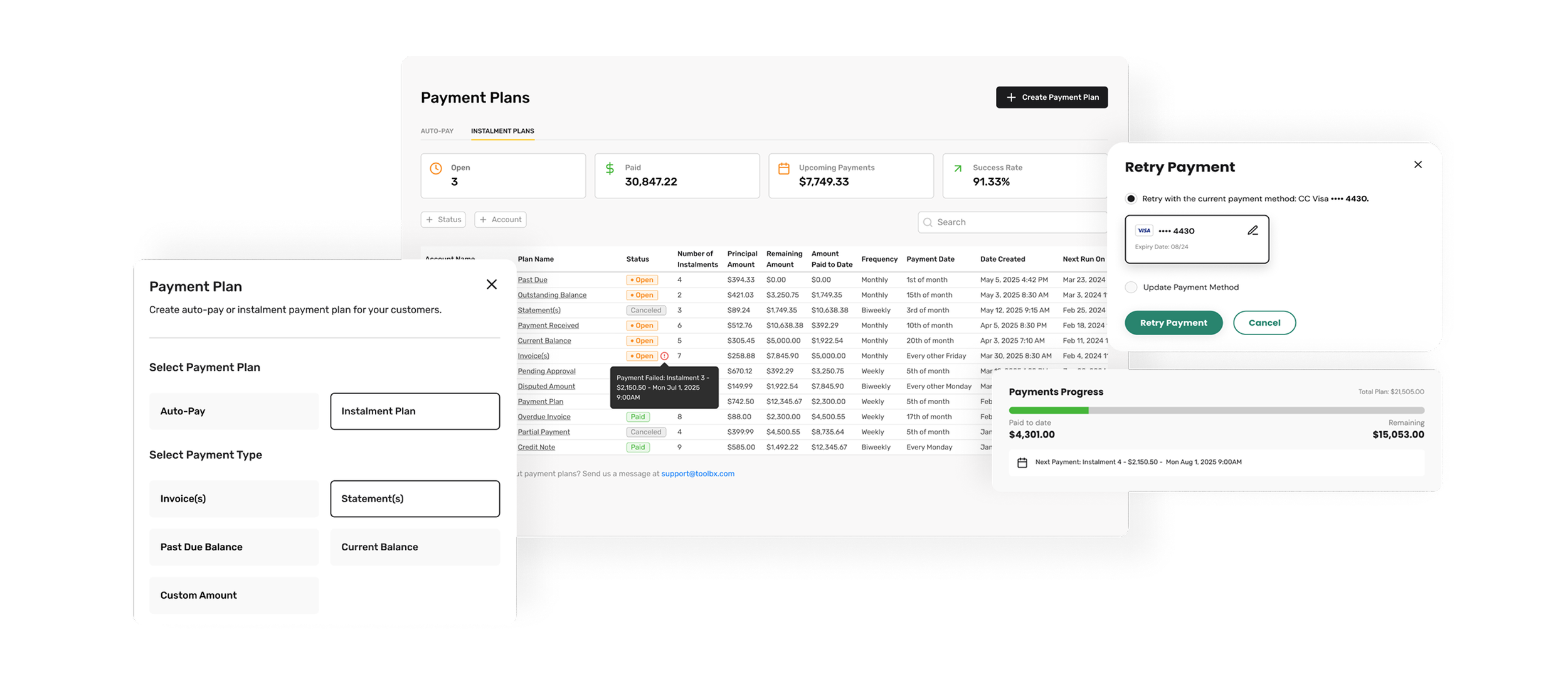
We simplified the debt collection process, helped dealers get paid faster, and hit our adoption goals within the first month.
scroll down for the detailed study ↓
the problem.
Sellers often struggle to get paid on time because their customers are hit with massive invoices all at once. A builder might owe $50,000 but won't have the cash on hand until a specific job is completed for the homeowner. This leaves the seller "chasing" money through awkward phone calls and manual follow-ups. We needed a digital solution that made these large debts feel manageable and less intimidating for the customers.
the solution.
Working with the Product Manager, we built an Installment Plan feature that allows dealers to bundle multiple invoices or set a custom negotiated amount into a schedule.
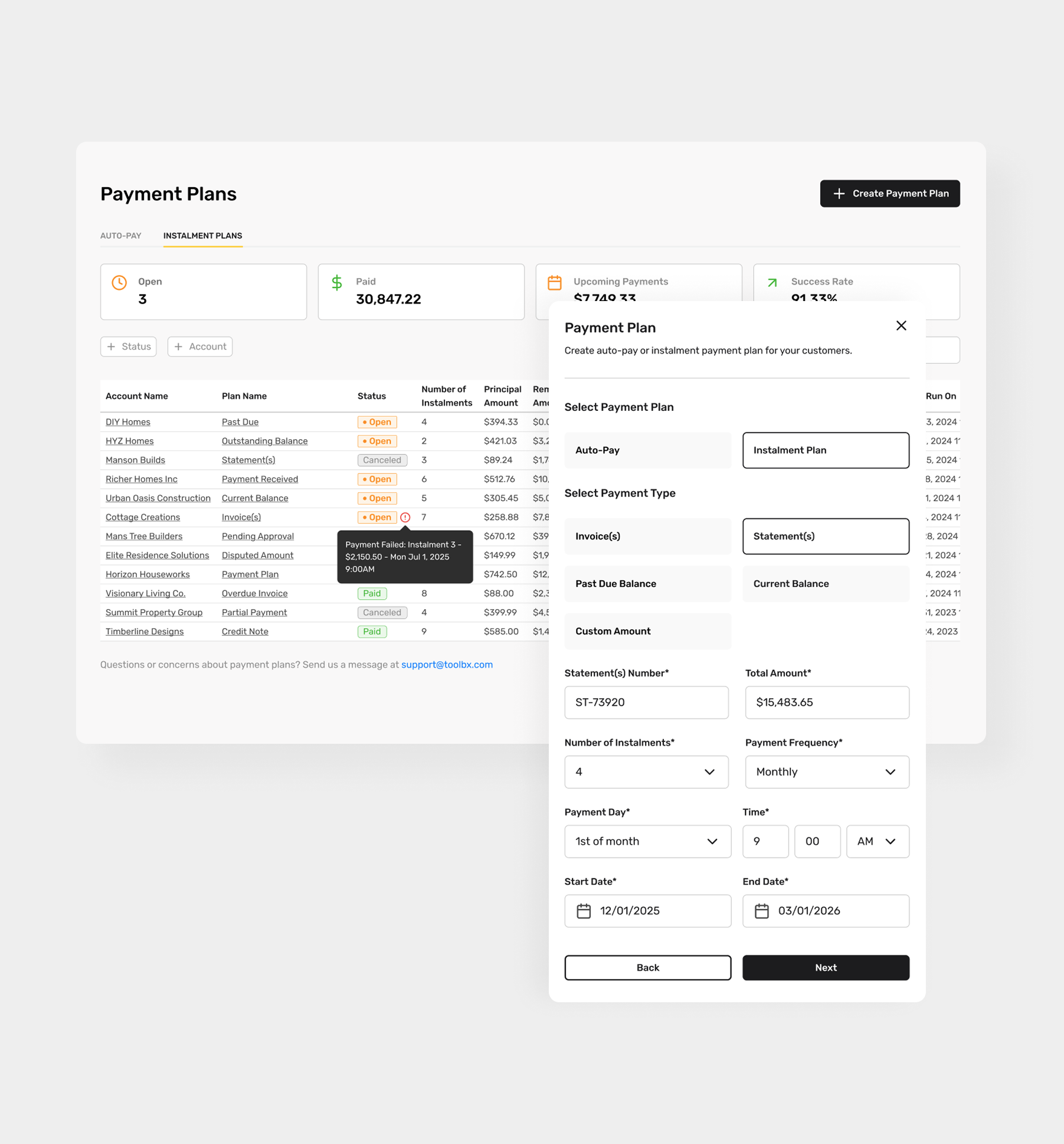
I designed a payment plan system that balances seller efficiency with customer transparency. A seller could initiate a payment plan from any existing invoice, account balance, or custom amount.
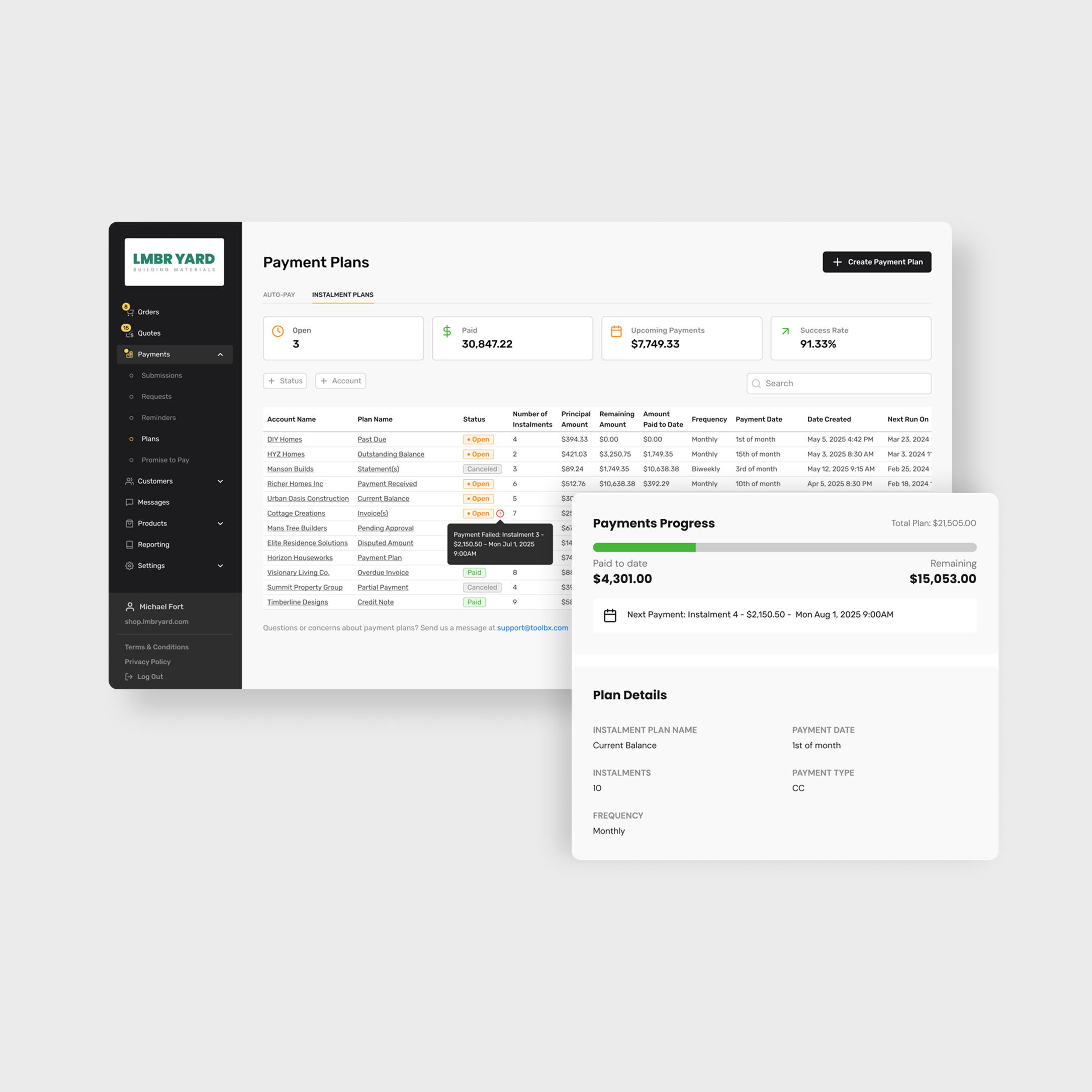
Since our design system and layouts are very established for certain views, like tables & details pages, I followed the familiar patterns for our users and created a table view of all active/inactive plans and enrolled customers, surfacing the key information needed for day-to-day management. We also introduced summary metric cards, allowing sellers to quickly understand total plan volume and overall financial exposure at a glance.
iterations.
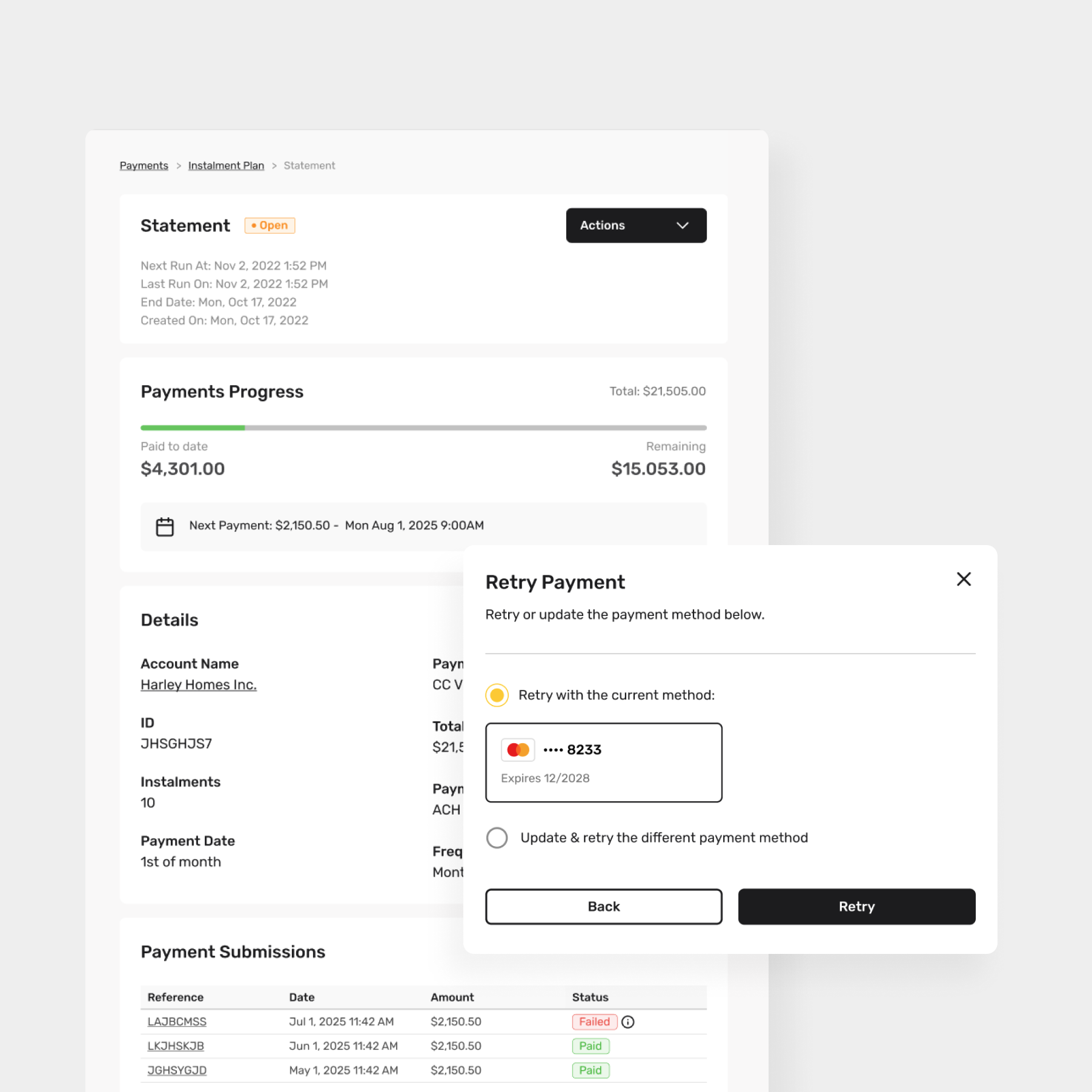
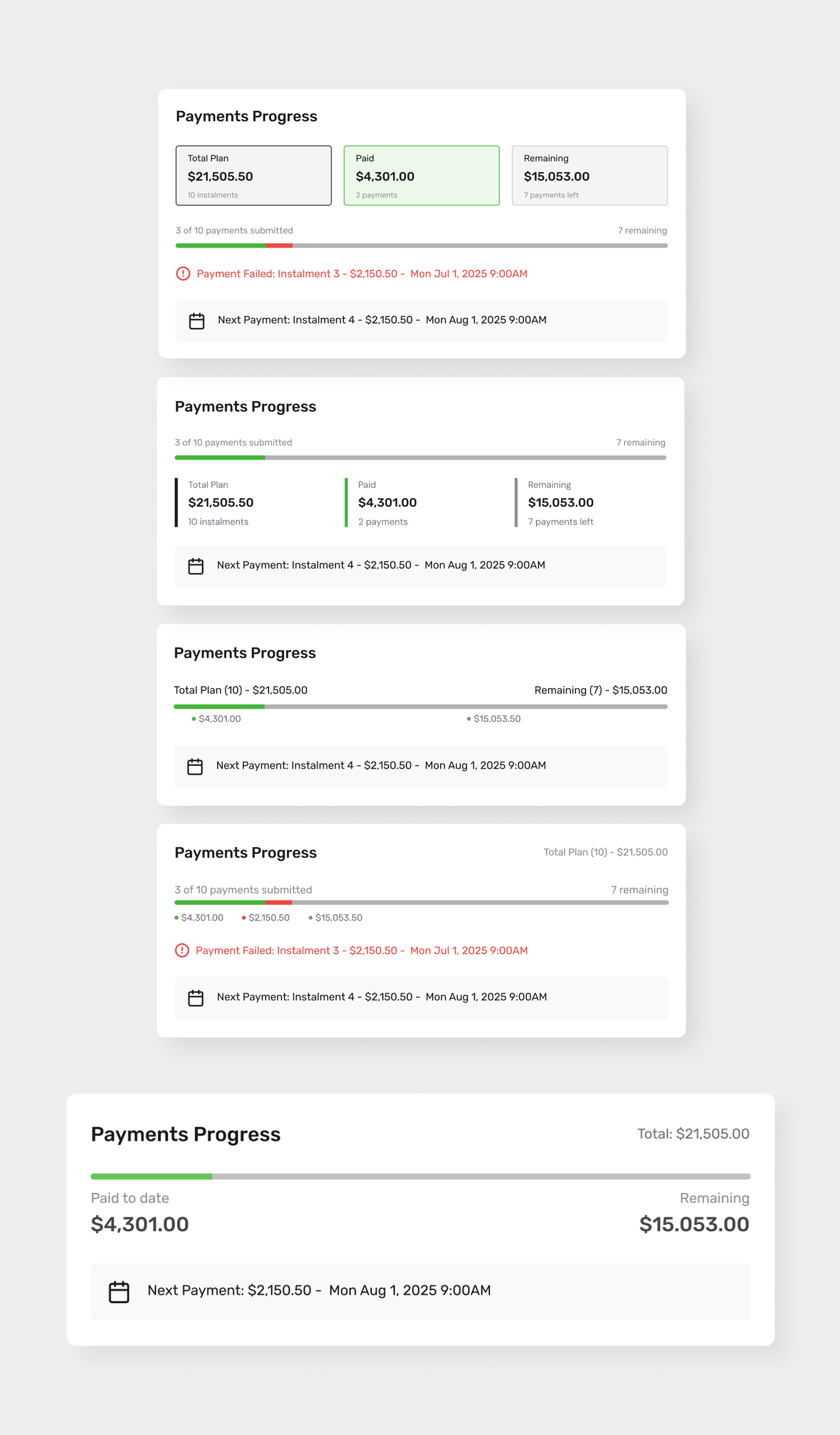
I designed a dedicated details page that surfaces key information such as plan creation date, scheduled payment runs, and remaining balance.
A central component of this page is a clear visual progress indicator, allowing sellers to quickly assess a customer’s payment status at a glance. Since the experience is purely about payments, it was essential that the design feel simple, transparent, and not intimidating.
Research showed that users primarily care about two things: overall payment progress and the remaining balance. The final design emphasizes these elements clearly and prominently.
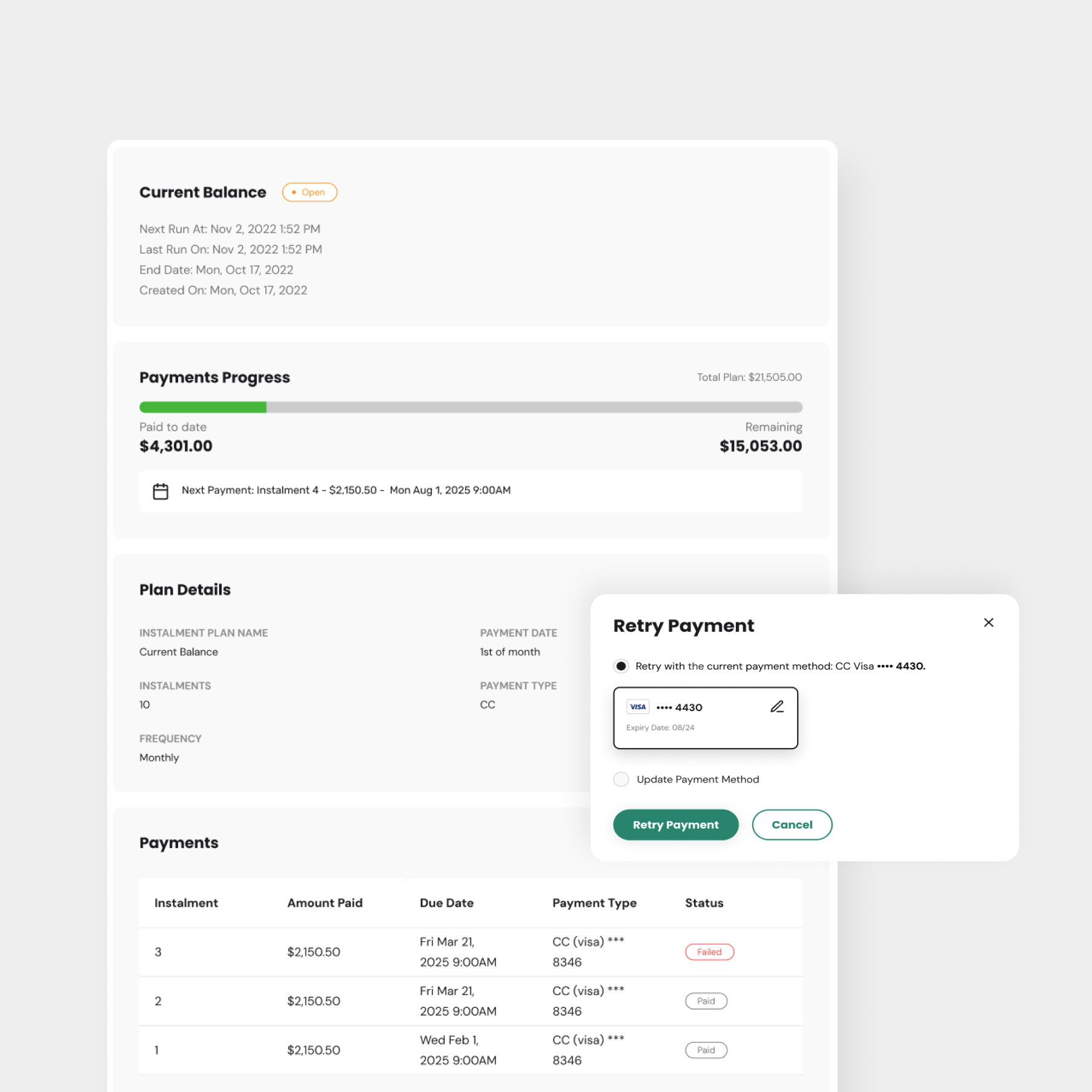
And in cases of failed payments, sellers are also able to manually retry transactions directly from the details page, reducing friction and support dependency.
the customer side.
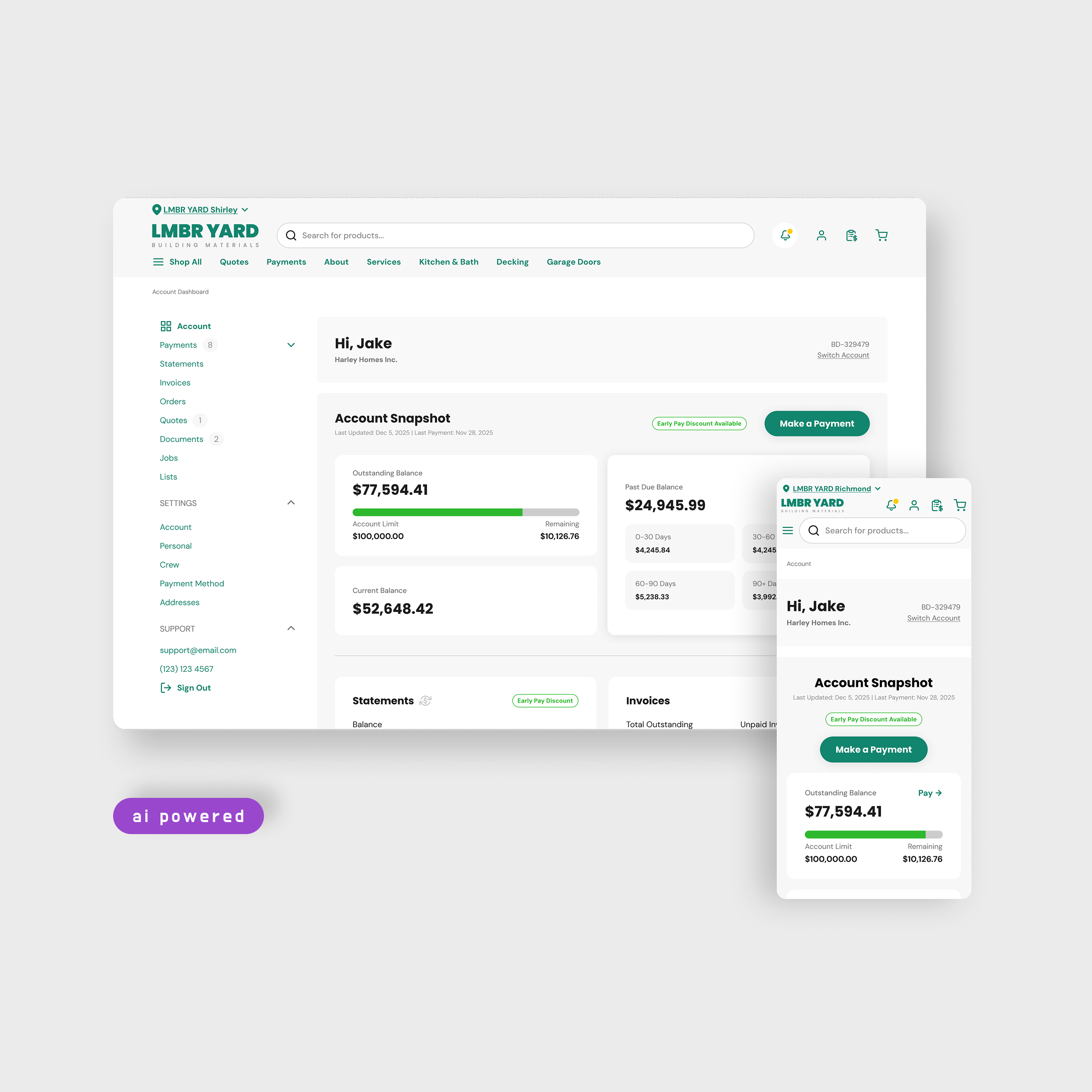
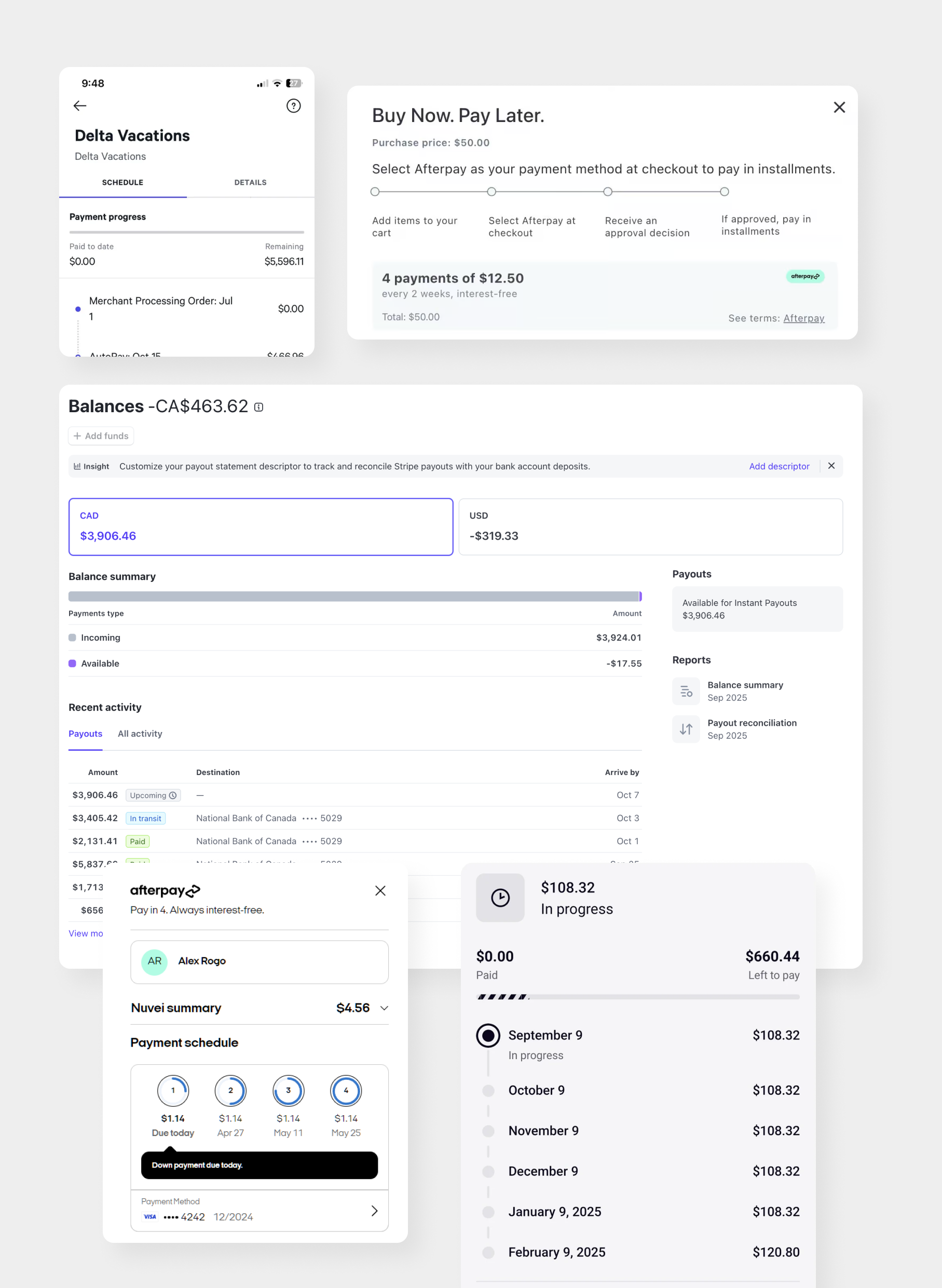
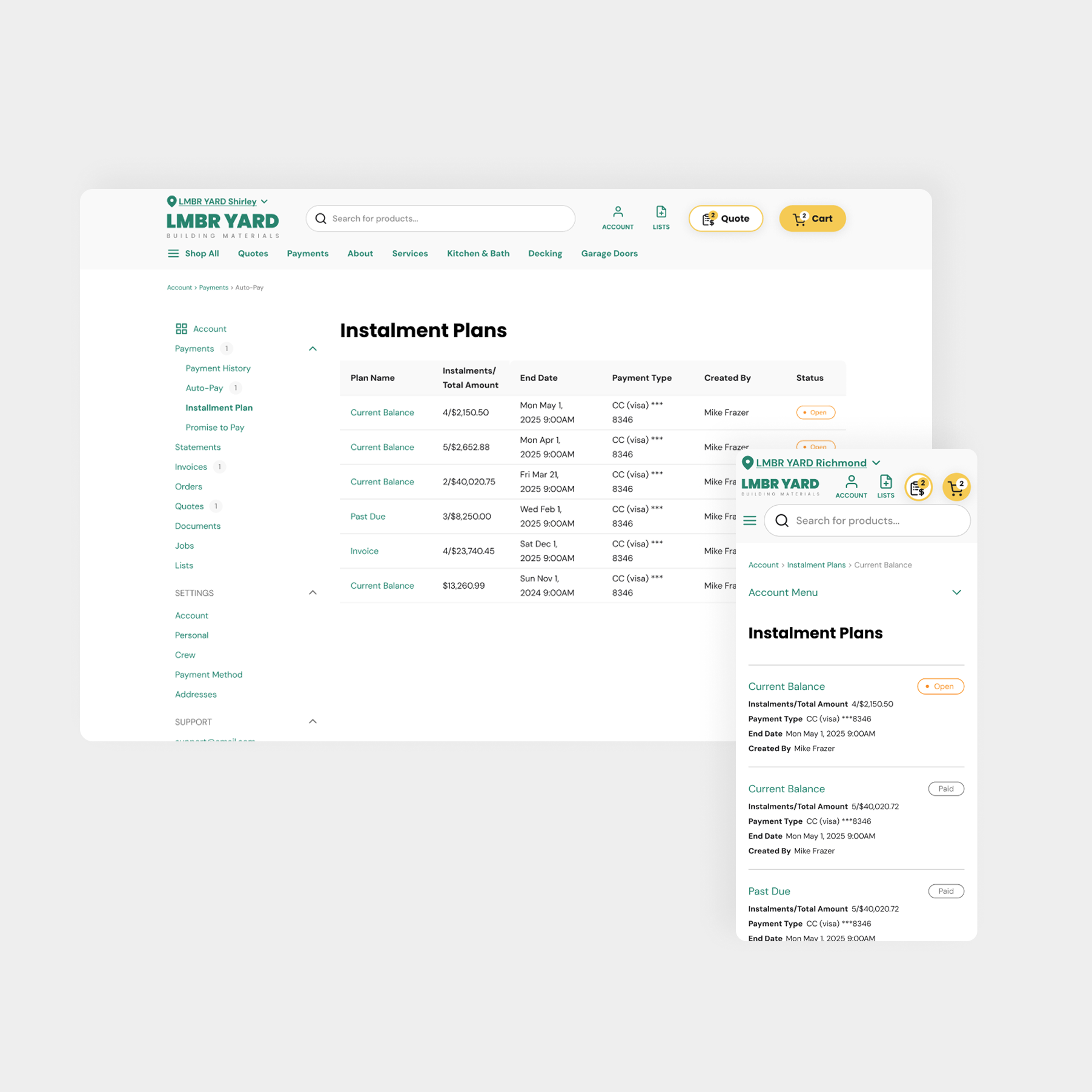
I made sure the customer’s view matched the seller’s so that both sides were always looking at the same information. The table clearly gave a summary of any plans the user is enrolled into, and the details page uses same progress bars and payment dates so customers know exactly what they’ve already paid and what is coming up next.
I also added a way for customers to retry a failed payment themselves, which gives them more control and saves them from having to call the dealer for help. To keep things transparent, I set up automatic emails that update the customer at every important step of their plan.
email notifications.
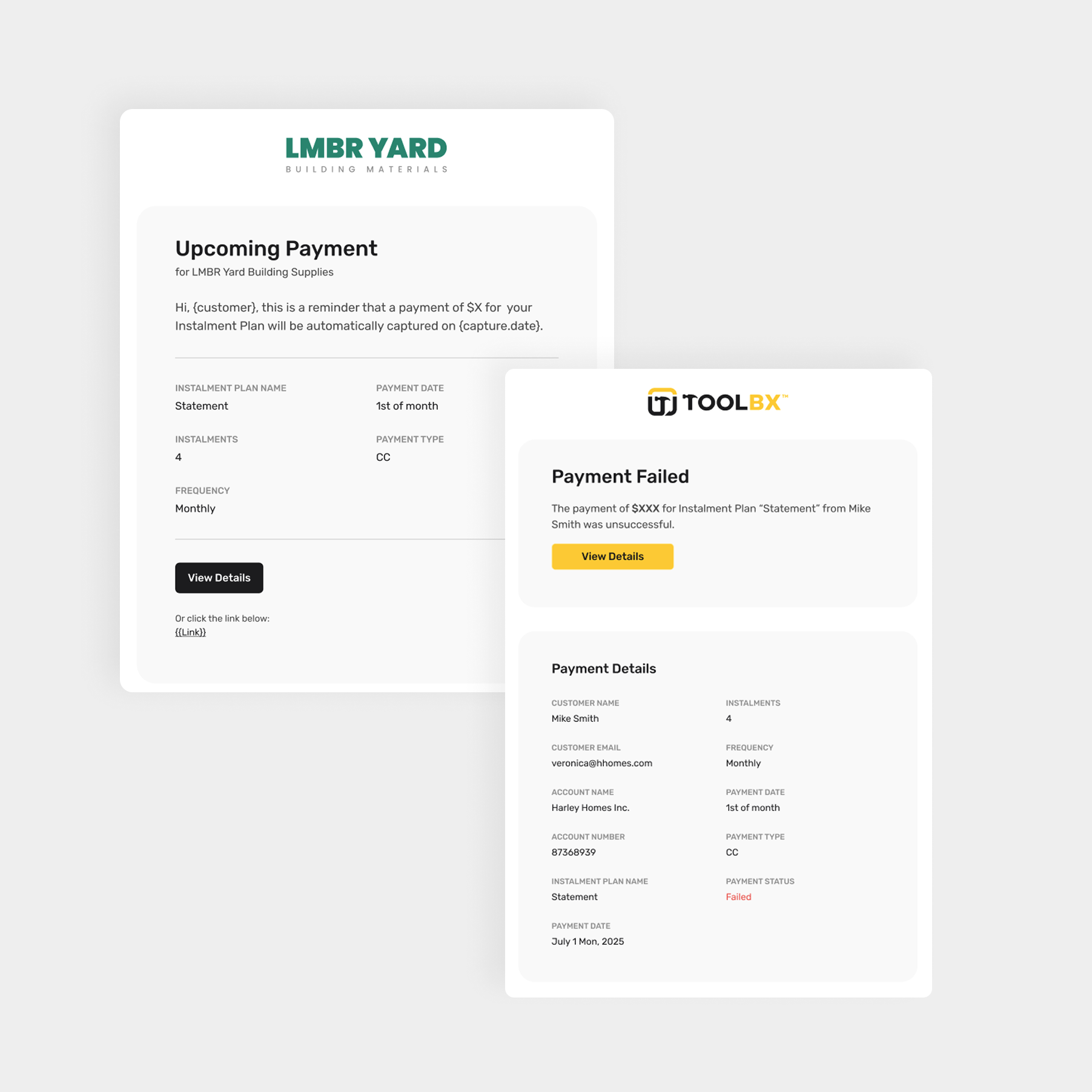
I created set of email notifications to handle the different stages and statuses of the installment plans. We set up friendly reminders before a payment came out, which gave customers a heads-up before the payment would happen.
And in a case of payment failure, we would send a quick recovery link immediately, letting the customer fix it themselves without the seller ever having to make an awkward phone call. It turned the whole process into a "set it and forget it" experience that felt way more transparent.
the outcome.
Business Growth: We successfully signed two major sellers who made this specific feature a requirement in their onboarding contracts.
Faster Collection: Sellers reported that customers were 3x more likely to stick to a smaller amounts weekly plan than pay a big amount of money at once.
Time Savings: The time spent on "debt collection" calls was reduced by roughly 40% as the system now automates reminders and tracking.